Story Intelligence for Escape.ai

Story Engine on Escape.ai’s film platform: video understanding, a typed story graph, search with time-coded citations, and character agents.
What it is
Escape.ai distributes AI-generated and game-engine films and interactive experiences. To ordinary software a film is a file with a title and perhaps a transcript. Story Engine watches each film once and keeps a structured, citable record of its story: who appears in every scene, what happens, how characters relate, and where each arc turns.
What we built
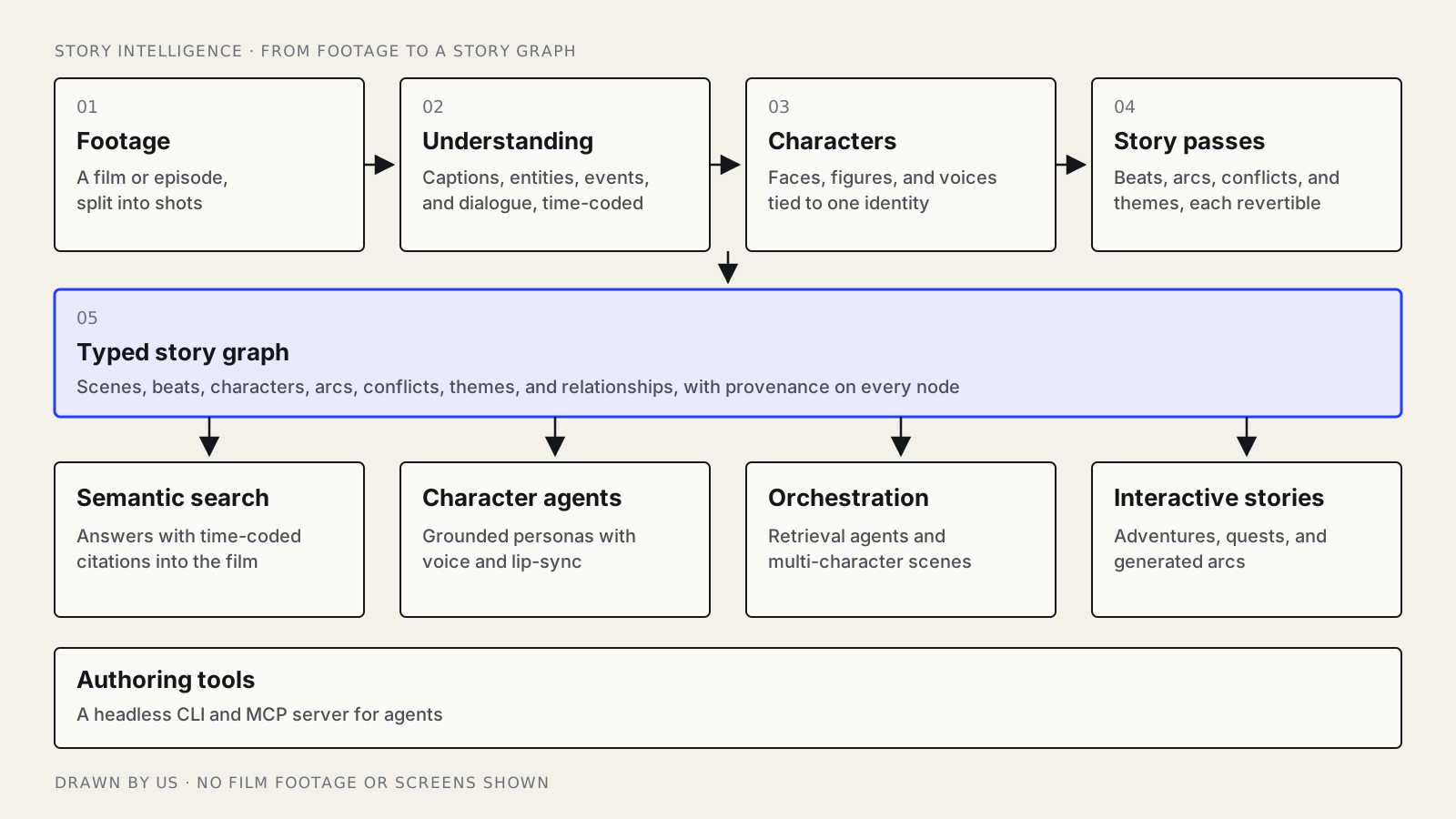
The ingestion and analysis pipeline, which splits footage into shots and reads out time-coded captions, entities, events, dialogue, and narrative acts. Character grounding that ties every appearance to one identity across a film. A typed story graph of scenes, beats, arcs, conflicts, and themes, with provenance on every node and revertible enhancement passes. Semantic search that answers with time codes. Retrieval agents and a multi-character orchestrator behind a streaming chat API, with persona voice and lip-sync. A command-line tool and MCP server so agents can query and author the graph, and interactive adventures, generated arcs, and multi-video universes built on top.
How it is used
Search, character conversations, and interactive stories on the platform all read from the same graph, so every answer can cite the moment in the film it came from.
Evidence
What it shows
What changed
Search, character conversations, and interactive stories on the platform read from one story graph, and every answer can cite the moment in the film it came from.
Video understanding
Footage is split into shots and indexed by time-coded captions, entities, events, dialogue, and narrative acts.
Search with citations
Semantic search over the films answers with time codes into the footage.
Story graph
A typed graph of scenes, beats, character arcs, conflicts, themes, and relationships, with provenance on every node and enhancement passes that can be reverted.
Character grounding
Every appearance of a character across a film is tied to one identity.
Agents and tooling
Retrieval agents and a multi-character orchestrator over the graph, with a command-line tool and an MCP server for agent-driven authoring.
Context
Escape.ai distributes AI-generated and game-engine films and interactive experiences. The facts above describe the engineering; no film footage, screens, or product names appear here.
Farwhen
Behind the experience
The systems this project uses, grouped by the part of Farwhen they belong to.
Worlds & Characters
Stories that grow with the audience.
Our technology
What it runs on
- Story Engine
The story intelligence capability: video understanding, the story graph, search, and character agents.
Built with
Credit
Engineering by Dream Awake Labs on Escape.ai’s film platform. No film footage or screens appear here.
Get in touch
Tell us what you have in mind.
Describe it in a few sentences. You get a draft brief to review before anything is sent.