Systems & Research
Synthetic Data Pipelines for Digital Humans
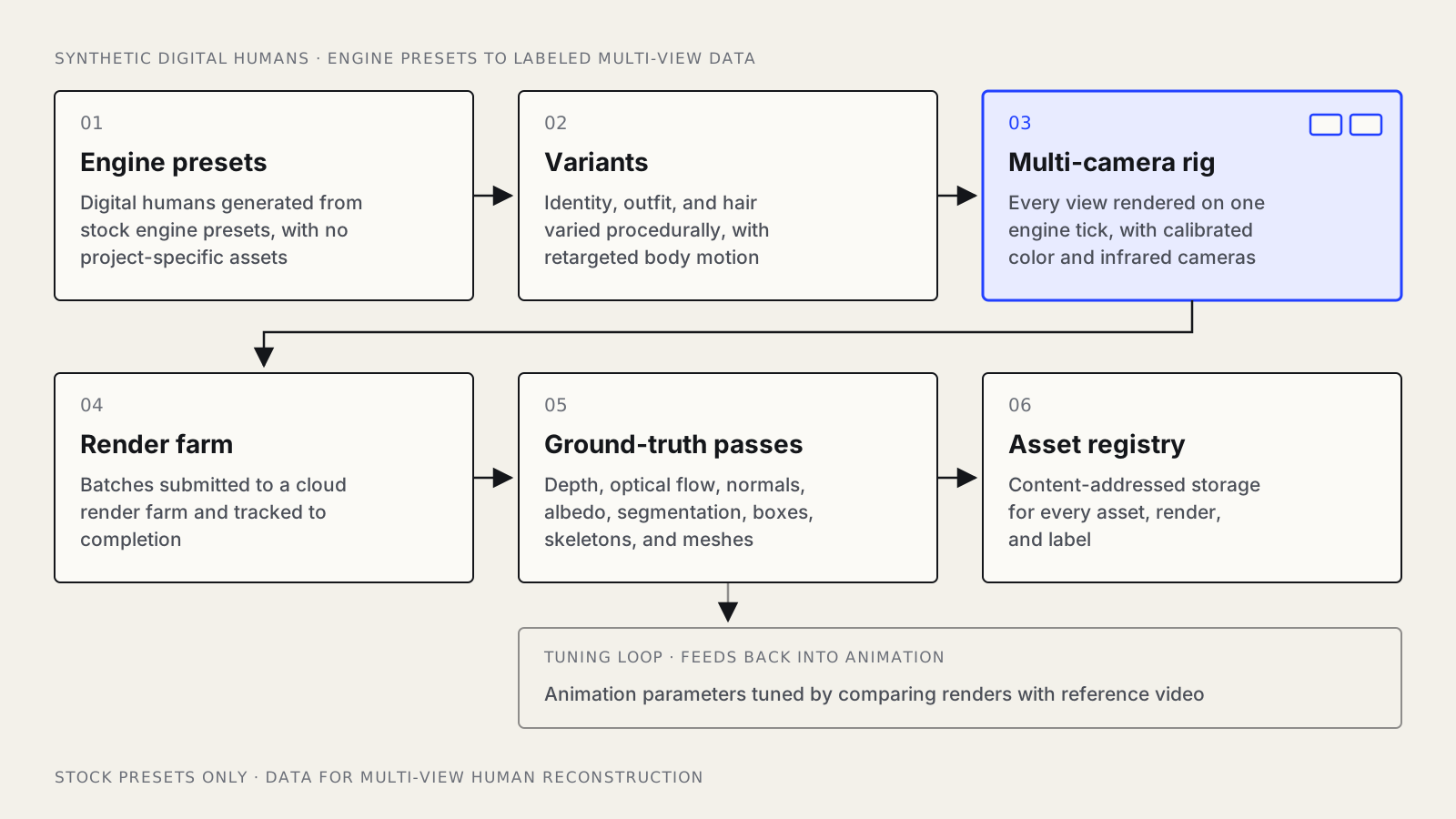
A rendering pipeline in Unreal Engine that produces labeled, multi-view video of digital humans for training models that reconstruct people from several cameras.
Digital Twin Simulation
Real capture rigs, real venues, and real crowds are expensive to run and impossible to label exactly. A simulated version is only useful if its cameras, physics, and timing match the real one closely enough to trust.
For teams that need to train a model, test an experience, or plan a venue against a version of the real thing that exists only in software.
Worked example
The synthetic-data pipeline we built for multi-view human reconstruction is a digital twin of a capture studio. Calibrated color and infrared cameras render every view on the same engine tick, with intrinsics and extrinsics written into every output, so a frame from one camera lines up with the same instant from every other.
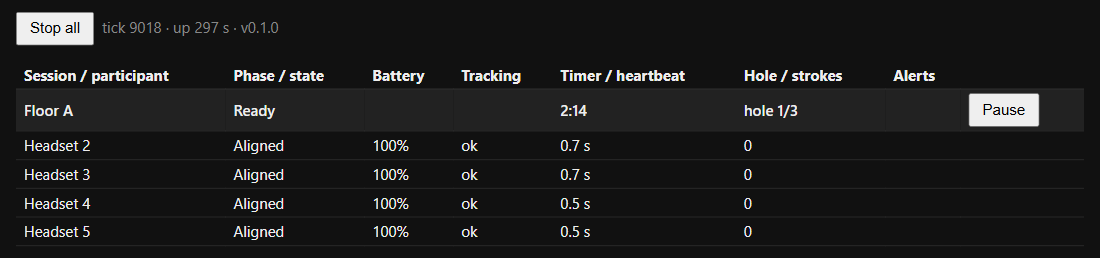
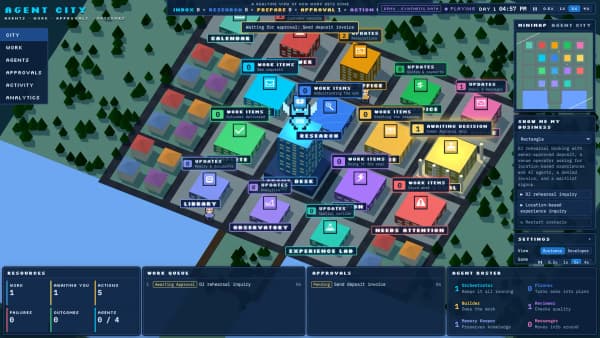
The same idea runs the venue side: Spatial Venue is exercised by simulated players that fill sessions without hardware, Spatial OS has a simulator seam for running an experience against fake devices before the real room, and Agent City plays deterministic scenarios through the real adapters, so a demo and a test are the same thing.
Read the case study: Synthetic Data Pipelines for Digital Humans
has a simulator seam, so an experience runs against fake devices before it runs in the room.
is exercised by simulated players that fill sessions, so a venue can be load-tested without headsets.
plays deterministic scenarios through the real adapters, so a demo and a test are the same thing.
provide the calibrated cameras, physics, lighting, and digital humans, extended with our own plugins where the stock renderer is not enough.
Unreal and Unity scenes with calibrated cameras, physics, and lighting that match the real thing.
Digital humans with real motion-capture performance, rendered from any viewpoint with exact labels.
Simulated players and devices that exercise a venue runtime and its show systems without hardware.
Deterministic scenarios that play through the real adapters, so a demo and a test are the same thing.
Depth, flow, normals, and segmentation passes alongside the image.
Custom plugins and engine patches where the stock renderer or physics is not enough.
Projects
Systems & Research
A rendering pipeline in Unreal Engine that produces labeled, multi-view video of digital humans for training models that reconstruct people from several cameras.
Systems & Research
A Rust server that runs shared sessions for several headsets in the same room, with a live status page, a command-line control tool, and a DASP control socket for automation.
Systems & Research
A live 3D city that shows a business owner what their AI agents are doing and holds every consequential step for a person to approve.
Where to start
We replay one scenario against simulated devices or players, or render one calibrated camera setup, and compare it with the real thing your team already measures.
Next step
Discuss a simulation projectGet in touch
Describe it in a few sentences. You get a draft brief to review before anything is sent.