
Stories & Characters
Story Intelligence for Escape.ai
Story Engine on Escape.ai’s film platform: video understanding, a typed story graph, search with time-coded citations, and character agents.
Story & World Intelligence
A transcript misses much of what happens on screen. Search and character experiences also need to track who appears, what happens, and how scenes connect, with references back to the footage.
For platforms, studios, and IP holders building search, character experiences, or interactive stories from their films and worlds.
Worked example
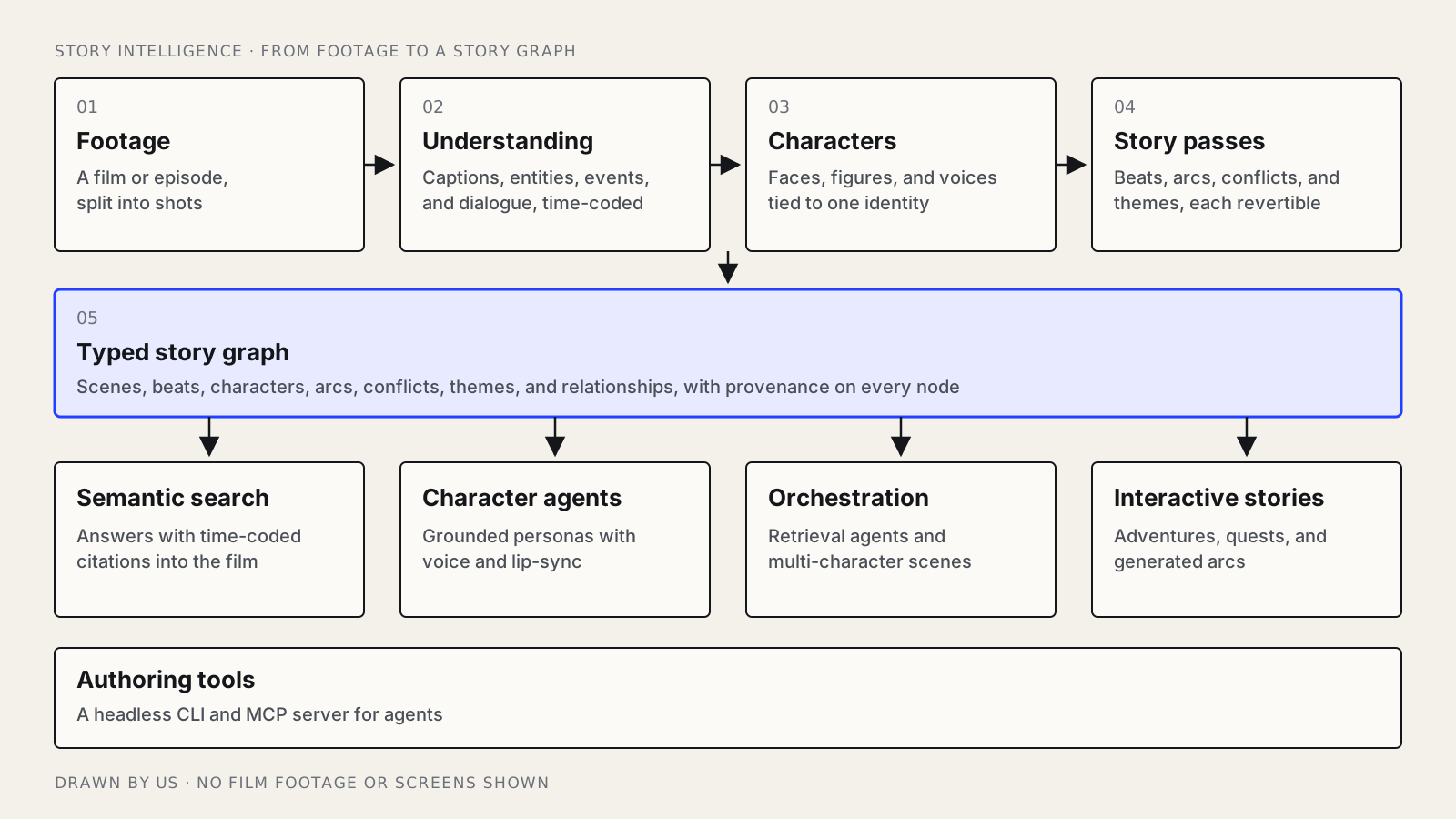
On Escape.ai’s film platform, Story Engine watches each film once. The pipeline splits footage into shots and reads out time-coded captions, entities, events, dialogue, and narrative acts. Character grounding ties every appearance to one identity across the film.
Those facts land in a typed story graph of scenes, beats, arcs, conflicts, and themes, with provenance on every node, so an enhancement pass can be reverted without losing what came before it.
Search, character conversations, and interactive stories all read from the same graph. Answers include references to relevant footage, and agents can query and author the graph through a command-line tool and an MCP server.
keeps a character to one identity across a film, records where every fact in the graph came from, and answers with time codes.
is the open protocol designed to carry story decisions to engines and rooms as typed messages, so a scene can drive a screen, a headset, or a venue.
is designed to route a story’s cues to the devices in a room, so a projected character and a robot host follow the same scene.
Shots, captions, entities, events, and dialogue indexed from the footage itself, each tied to its moment.
Questions answered with time-coded citations into the film.
A typed graph of scenes, beats, arcs, conflicts, and themes, with provenance on every node.
One identity per character across a film, with persona and voice for conversation.
Knowledge graphs that span several works and keep a world’s facts consistent.
Retrieval agents, multi-character scenes, and interactive stories that read from the graph and stay grounded in it.
Projects
Stories & Characters
Story Engine on Escape.ai’s film platform: video understanding, a typed story graph, search with time-coded citations, and character agents.
Experiences & Worlds
A concept for exploring the Earth across a room through a voice-guided globe, public data, interactive projection, and a robot guide.
Where to start
We index one film or one series into a searchable story graph and put a question-answering agent over it, so your team can judge the answers against the footage.
Next step
Discuss a story intelligence projectGet in touch
Describe it in a few sentences. You get a draft brief to review before anything is sent.