Puttscape: Mixed-Reality Mini-Golf

Mixed-reality mini-golf on Meta Quest 3 and Android XR from one codebase, with holes generated from the scanned room and a venue client that connects the game to our Spatial Venue server.
What it is
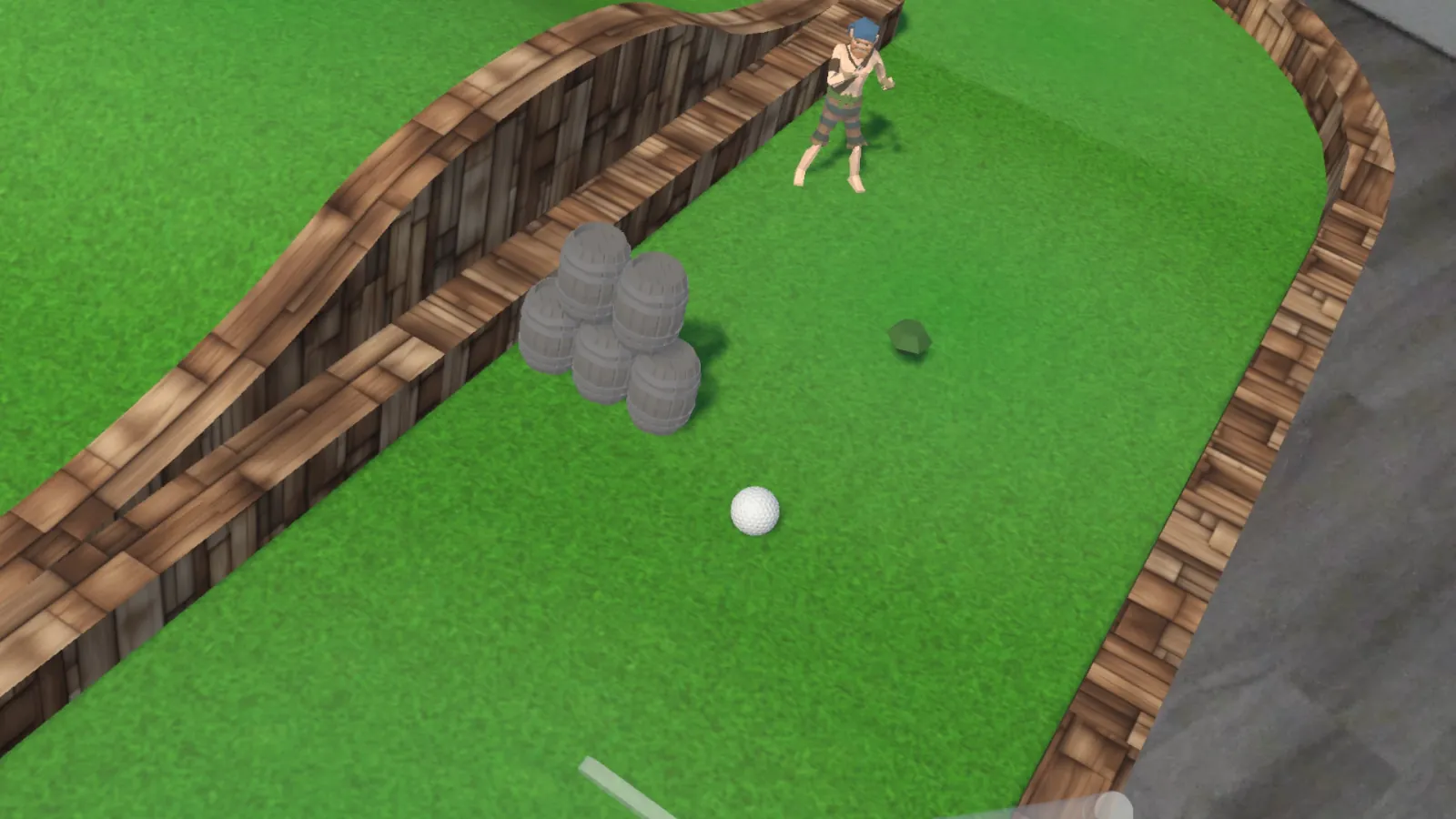
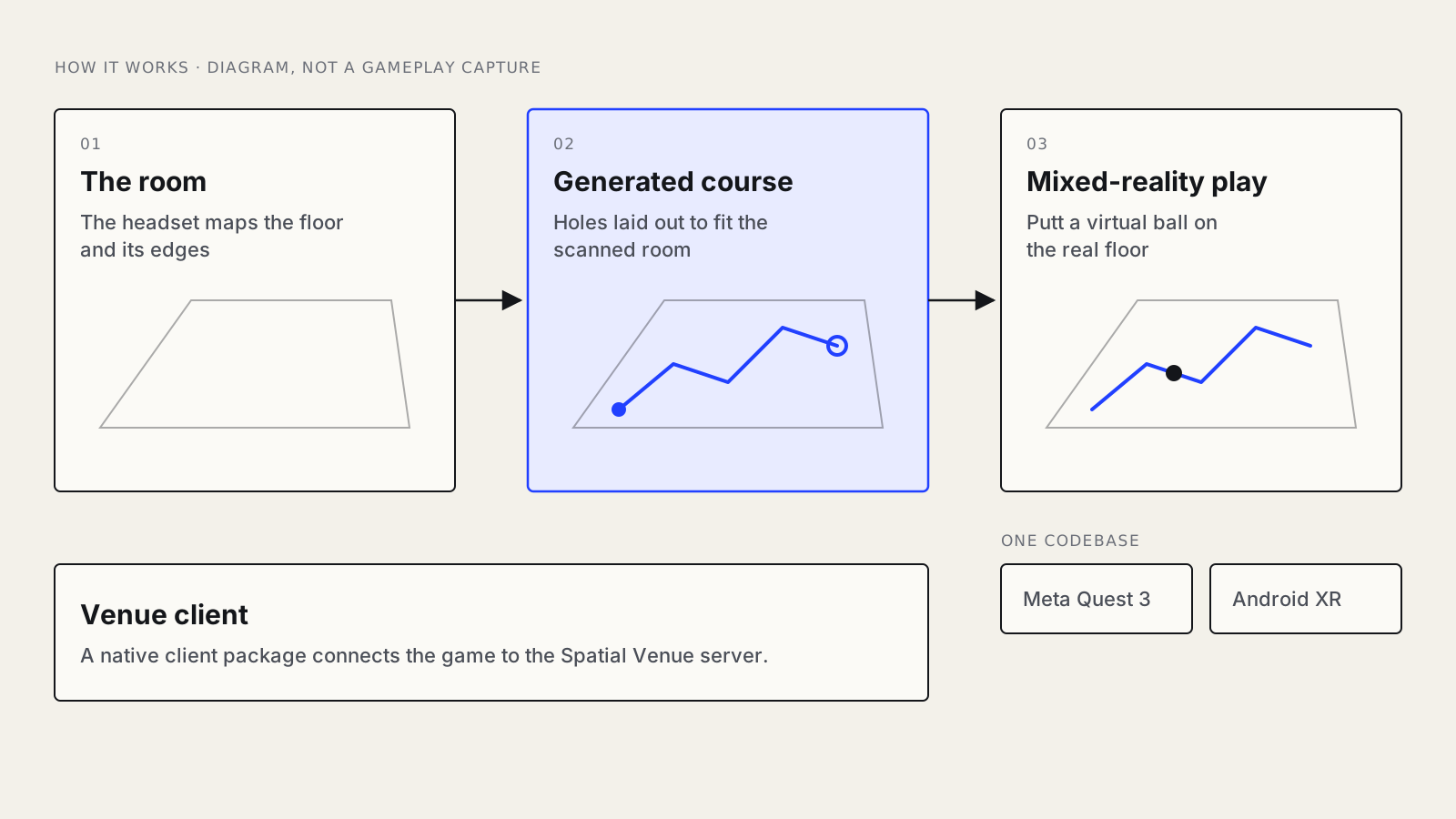
Puttscape is mixed-reality mini-golf: players putt a virtual ball across a real floor. The headset scans the room and a generator fits a hole to the floor it finds, so the same game works in rooms of any size and shape.
What we built
The game’s platform engineering: a move to AR Foundation so one Unity codebase builds for Meta Quest 3 and Android XR, the procedural generator that lays out a hole on the player’s scanned room, and hand tracking, putter physics, and theme packs shared across both platforms. For venue play we built the native client library, shipped as a Unity package, that connects the game to Spatial Venue, our venue server, and the operator tooling around the server: a live status page and a command-line control tool.
How it is used
A player scans the room, the course is laid out on the real floor, and hand tracking and putter physics do the rest. The venue client gives the game a session on Spatial Venue, which keeps the ball, scores, and course in one place for a floor that staff run from the status page and control tool.
Evidence
What it shows
What changed
One Unity codebase builds for Meta Quest 3 and Android XR, lays a hole on the floor the headset scanned, and connects to the Spatial Venue server from a real headset.
Two headset platforms
The AR Foundation port builds for Meta Quest 3 and Android XR from one codebase, with the game checked on both devices.
Room-scan course generation
The procedural generator lays a hole on the scanned room, verified in single-player play on a Quest 3 and covered by editor tests.
Shared gameplay systems
Hand tracking, putter physics, and theme packs are written once and run on both platforms.
Venue handshake
A native client on a Quest 3 completed the session handshake with the Spatial Venue server.
Context
Puttscape is named where the work is described. Sessions with several headsets are described on the Spatial Venue study, where they were tested with simulated players.
Farwhen
Behind the experience
The systems this project uses, grouped by the part of Farwhen they belong to.
Interactive Experiences
Games made for the places we play.
Spatial Orchestration
The room becomes part of the experience.
Our technology
What it runs on
- XR foundation
The Unity AR Foundation base supports the game on Quest and Android XR.
- Spatial Venue
The venue client package connects the game to the Spatial Venue server.
- DASP
Automation reaches the venue server through its DASP control socket.
- Venue devices
Headset discovery and telemetry for the venue floor.
Built with
Credit
Engineering by Dream Awake Labs on the Puttscape game and the Spatial Venue server.
Get in touch
Tell us what you have in mind.
Describe it in a few sentences. You get a draft brief to review before anything is sent.